Beyond the Payout: How PingPong Rewrote Payment Architecture
Most cross-border payment providers have mastered moving money out. PingPong built the infrastructure to match on the way in. This is the story of how, and what it unlocks for the businesses we serve.
By Alex Young, Head of FI Partnerships, Europe and Americas
The cross-border payments industry has spent the better part of a decade racing to optimize the same thing: Getting money out faster.
Faster payouts. Smarter routing. How quickly that last mile can be delivered.
What most players have overlooked, however, is the other side of the transaction. The “collection leg”, also known as the moment a business receives funds from a customer in another market.
This is where the real complexity lives, and it's where PingPong has been quietly building something different.
Built for Both Sides
The complete flow of a cross-border payment covers various steps: A business sells into a new market. A customer pays that business in their local currency. That payment then needs to be collected, held, converted, and eventually paid out wherever the business needs it.
Many providers have nailed the objective of moving money out. Where the gap lies, however, is the infrastructure of how to get it in.
This results in slow settlement, a narrow set of supported use cases, and a collections layer that doesn’t match the sophistication of the payout engine sitting right next to it.
With PingPong’s origins in marketplace infrastructure, we focused on solving weeks-long settlement times and punishing fees international sellers faced when trying to collect revenue across borders. This meant systematically obtaining licences in key corridors while building lasting partnerships alongside Tier-1 banks and financial institutions.
Our strategy allowed us to create an infrastructure designed to accurately reflect what is needed for cross-border payments, end-to-end: collect, hold, convert, and pay.
While this meant years of building regulatory frameworks and operational expertise, it is one of the clearest points of differentiation for PingPong.
The Art of the Possible
Historically, the path to local clearing in any given market has run through a bank.
You open an account. The bank provides the infrastructure. You collect on behalf of your customers, move the funds, and pay out.
But every banking intermediary adds time, cost, and introduces dependencies outside of your control. Flow approvals can be narrow. Risk tolerances vary. And when a bank's appetite shifts, it’s felt immediately.
As PingPong grew, so did our ambition – and possibilities – for what market access could look like. This meant digging deeper into the evolving mix of payment schemes and re-defining what end-to-end solutions meant for our partners.
Three Rails, One Network
SEPA: Direct Access to European Clearing
In the Eurozone, PingPong has achieved something that relatively few non-bank payment institutions have done: direct participation in the SEPA clearing schemes (both SEPA Credit Transfer and SEPA Instant).
Transactions now flow in and out of PingPong under our own identifiers, without routing through a banking intermediary. In working with key partners, we deliver a faster and safer payment infrastructure to the EU for all of our clients.
This means a business collecting revenue across Europe is not waiting on a third party to approve the transaction or adjust a flow limit. The result is faster onboarding, broader flow approvals, and the ability to move quickly when needed.
BACS, CHAPS, and Faster Payments: Agency Banking, Elevated
In the UK, the path to local clearing for non-banks has a longer history. The concept of agency banking, through which non-credit institutions can access clearing through a sponsor bank, has existed in various forms for decades.
The emergence of API-native infrastructure providers has created a new path — one that gives EMI license holders like PingPong direct access to domestic clearing (BACS, CHAPS, and Faster Payments) at scale, with our own brand on the infrastructure.
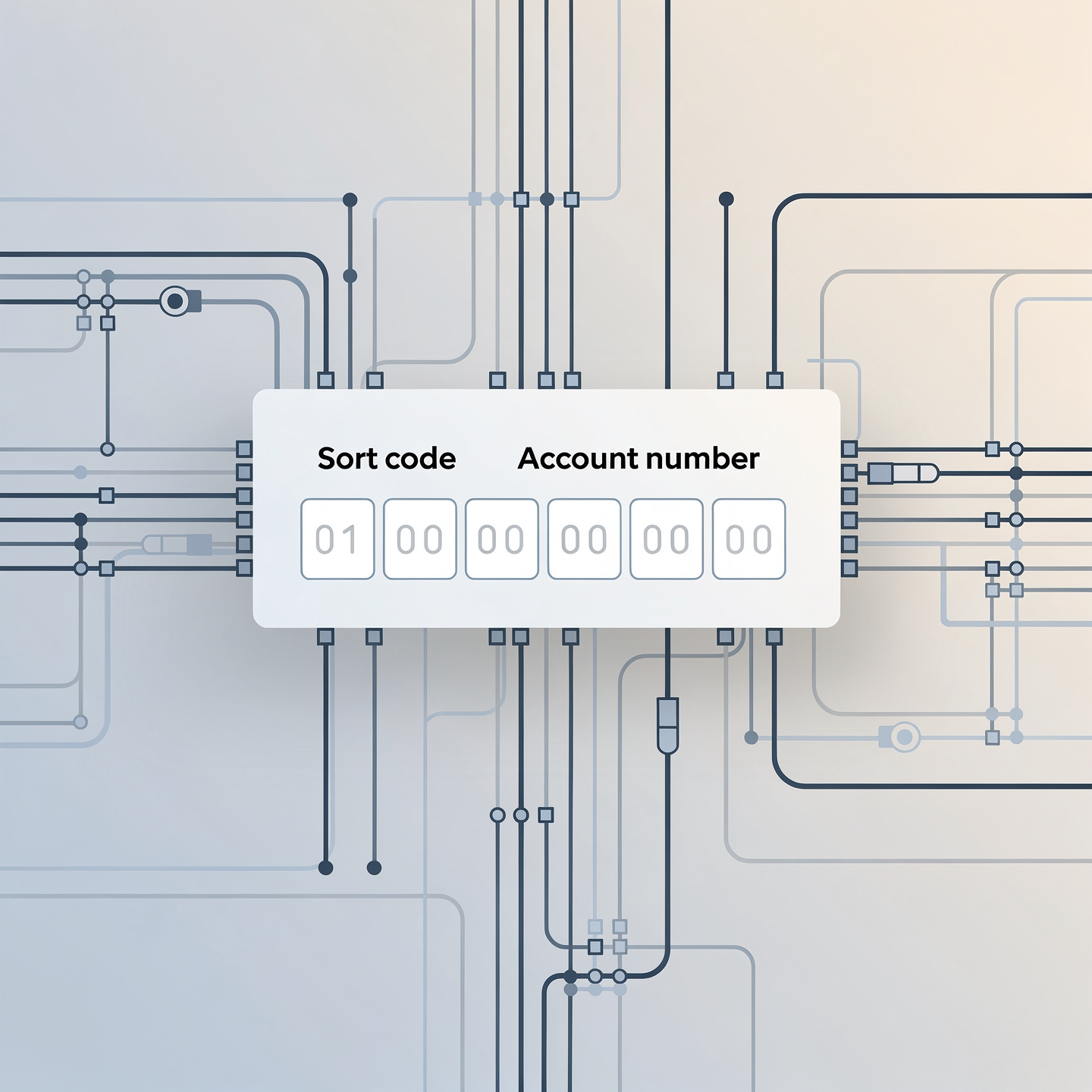
The result for our customers is a named UK account and a PingPong sort code. We've secured broad flow approvals covering our international business lines, meaning we can onboard customers across business types without fragmented, flow-by-flow approval processes. Fewer constraints on who we can serve and how quickly we can bring them on.
The mechanism behind it is agency banking. The experience is not.
SWIFT: The Bridge Rail
For many clients, speed isn't the main factor. Reliability is. It doesn't matter how fast your payment can land if it frequently fails to land in the first place.
Many financial institutions have operated on SWIFT for decades. Their systems, their workflows, and their teams are all built around it. Asking them to switch to API connectivity to access cross-border capability isn't realistic. But providing a connection without the need to rebuild their tech stack is.
PingPong is now a supervised global BIC holder, with SWIFT infrastructure that allows us to serve these clients on their terms. The result is an answer that doesn’t force clients to choose between speed and accessibility.
Instant, same-day, or SWIFT, we meet clients where they are and build together from there.
Banking Partners: Collaboration, Not Competition
It would be easy to read this strategy as PingPong is moving away from banks. The opposite is true – we have been more closely aligned with our Tier-1 banking partners to create the best solutions across the board.
The reality is that in most markets, banking infrastructure remains essential. What we've done in Europe and the UK isn't a departure from this model, but a reflection of how far PingPong has come as a regulated business, and what that maturity unlocks.
That maturity has actually brought us closer to our banking partners, opening up a different kind of conversation. One built on developing solutions together, rather than dependency on one another. With our global reach, technology stack, and licensing depth, paired with their decades of market experience, regulatory relationships, and banking expertise, we can now build things together that neither of us could establish alone.
The companies that define the next decade of this industry won't be the ones that move money fastest. They'll be the ones who built the most resilient, most flexible, most broadly accessible infrastructure underneath it.
Ready to unlock the power of the PingPong Platform?